

How do I choose a screwdriver bit for a long - shaft screw?
Selecting the right screwdriver bit for a long - shaft screw is a crucial task that can significantly impact the efficiency and quality of your work. As a supplier of Screwdrivers and Bits, I've witnessed firsthand the importance of making the correct choice. In this blog, I'll share some insights on how to choose the appropriate screwdriver bit for long - shaft screws.
Understanding Long - Shaft Screws
Long - shaft screws are commonly used in various applications where a deeper reach is required. They are often found in construction, furniture assembly, and automotive repair. These screws typically have a longer shank compared to standard screws, which means that the screwdriver bit needs to be able to reach the screw head effectively without bending or breaking.
Consider the Screw Head Type
The first step in choosing a screwdriver bit is to identify the type of screw head. There are several common screw head types, each requiring a specific screwdriver bit:
Phillips Head
Phillips head screws are one of the most widely used types. They have a cross - shaped indentation on the head. For Phillips head long - shaft screws, you need a Phillips - type screwdriver bit. Make sure to select the right size of the Phillips bit. The size is usually indicated by a number, such as PH0, PH1, PH2, etc. A mismatched size can lead to slipping, which may damage the screw head or the surrounding material.
Slotted Head
Slotted head screws have a single straight slot on the head. To work with slotted long - shaft screws, you'll need a Slot Head Screwdriver. It's important to choose a bit that fits the width of the slot precisely. A bit that is too narrow may not provide enough torque, while a bit that is too wide can damage the screw head.
Torx Head
Torx head screws have a star - shaped pattern. They are known for their ability to handle high torque without cam - out. When dealing with long - shaft Torx screws, select a Torx - style screwdriver bit with the appropriate size, which is denoted by a number like T10, T15, T20, etc.
Hex Head
Hex head screws have a hexagonal - shaped indentation. For long - shaft hex screws, use a hex - shaped screwdriver bit. The size of the hex bit is determined by the width across the flats of the hexagon.
Material and Durability
The material of the screwdriver bit is another important factor. High - quality bits are typically made from materials such as chrome - vanadium steel or high - speed steel. These materials offer good hardness and durability, which are essential when working with long - shaft screws. A durable bit can withstand the torque required to drive the screw in and out without deforming or breaking.
For example, if you're working on a project that involves a large number of long - shaft screws, a bit made from chrome - vanadium steel will likely last longer and perform better than a cheaper, lower - quality alternative.
Bit Length
Since we're dealing with long - shaft screws, the length of the screwdriver bit is a critical consideration. The bit should be long enough to reach the screw head without being so long that it becomes unstable or difficult to control. Measure the depth of the area where the screw is located to determine the appropriate bit length.
In some cases, you may need an extra - long bit. However, be aware that very long bits can be more prone to bending under torque. To mitigate this, look for bits with a reinforced shank or consider using a bit extender in combination with a standard - length bit.
Magnetic or Non - Magnetic
Magnetic screwdriver bits can be very useful when working with long - shaft screws. They help to hold the screw in place on the bit, making it easier to insert the screw into the hole, especially in hard - to - reach areas. This can save time and reduce the frustration of dropping the screw.
On the other hand, non - magnetic bits are preferred in certain applications where magnetic interference could be an issue, such as working near sensitive electronic components.
Insulation
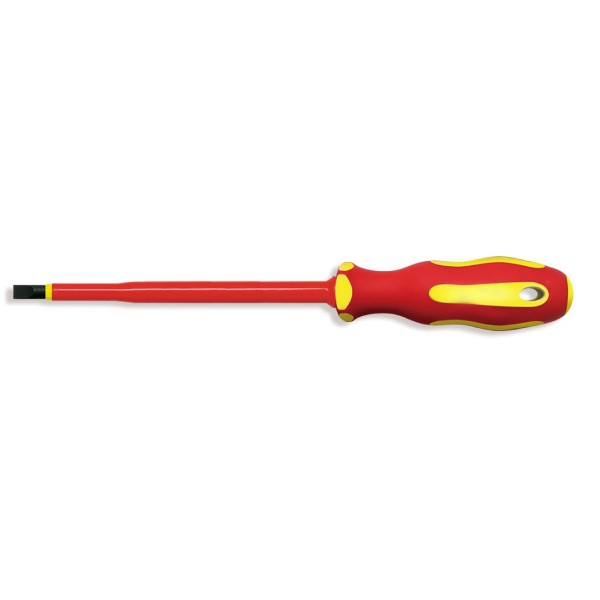
If you're working in an environment where electrical safety is a concern, consider using an Insulated Slotted Screwdriver. Insulated bits can protect you from electric shocks when working on live electrical circuits. Make sure the insulation is rated for the appropriate voltage level.
Compatibility with the Screwdriver
The screwdriver bit must be compatible with your screwdriver. Most modern screwdrivers use a quick - change chuck system, which allows you to easily swap out bits. Ensure that the shank size of the bit matches the chuck size of your screwdriver.
Some screwdrivers are designed for specific types of bits. For example, a cordless drill - driver may have a different chuck design compared to a manual screwdriver. Make sure to check the specifications of your screwdriver to ensure proper compatibility.

Special Considerations for Long - Shaft Screws
Long - shaft screws often require more torque to drive in or remove. This means that the screwdriver bit needs to be able to handle the increased force. Look for bits that are designed for high - torque applications.
In addition, long - shaft screws may be used in tight spaces. In such cases, a Short Stubby Screwdriver or a bit with a low - profile design may be more suitable. These types of tools can provide better access and control in confined areas.
Conclusion
Choosing the right screwdriver bit for a long - shaft screw is not a simple task, but by considering the screw head type, material, length, magnetic properties, insulation, and compatibility with your screwdriver, you can make an informed decision. As a supplier of Screwdrivers and Bits, we offer a wide range of high - quality bits to meet your needs. Whether you're a professional tradesperson or a DIY enthusiast, having the right tools can make your work easier and more efficient.
If you're interested in purchasing our screwdriver bits or have any questions about choosing the right bit for your project, we encourage you to contact us for a procurement discussion. We're here to help you find the best solutions for your screwdriving needs.
References
- "Hand Tool Handbook" by The Home Depot
- "Screwdriver Selection Guide" by Stanley Black & Decker