


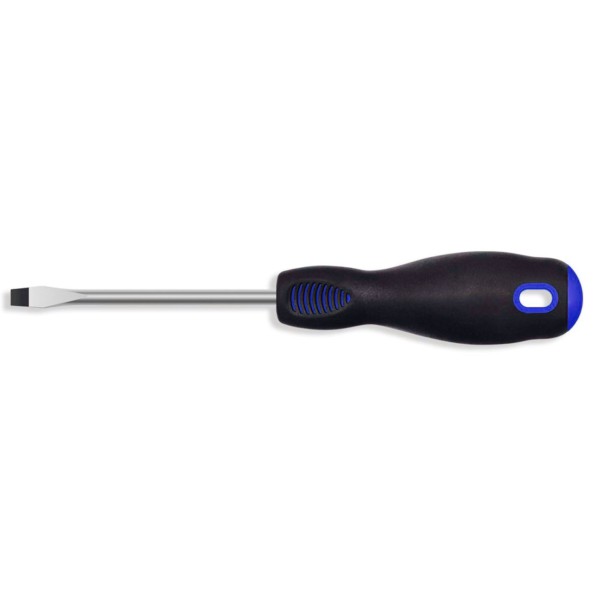
Slot Head Screwdriver
Slot Head Screwdriver is a very common type of screwdriver, commonly known as a flat screwdriver, mainly used to rotate slotted screws, wood screws, and self-tapping screws. Compared with other screwdrivers, its positioning is very accurate, and due to its simple structure, it applies force well.
Product Introduction
Qiao Song Technology Company, founded in 2009 in Taiwan, is one of the outstanding OEM/ODM manufacturers for international brands and multi-stores worldwide.We have a complete supply chain for one-stop service from design, space planning, prototyping, manufacturing, and assembling to export.With over a decade of experience, we satisfy a variety of industries from crossover and integration.Creating an inspirational space is our objective; for us, our name is more than that: A full-energy room should have experience in a happy and healthy environment. We dedicate to seeing our customers succeed. Your goals are our goals.
Why Choose Us
Our factory
Our project directors and design team are specialists in their respective fields.Moreover, we have been investing in comprehensive equipment to fulfill different processing. These points help us to achieve a leading position in the industry.
Our product
Display platform, display stand, display cabinet, display rack, cap rack, double-layer display desk, gondola, golf display rack, loft style furniture, magazine rack, cosmetic display kiosk, cosmetic display rack, ceiling mounted rack, and OEM, ODM products.
Product application
We specialize in different types of retailers, such as convenience stores, drug stores, department stores, cosmetic stores, liquor stores, and apparel stores.Our customers included many famous brands, like Watsons, Shiseido, Family Mart, Daiso, and Iittala.
Our Service
We believe that continuous customer service helps the enterprise maintain a well-running; we mainly focus on customer experience rather than only providing a low price.Our competition includes actual production, sound quality policy, and quick service.

Slot Head Screwdriver is a very common type of screwdriver, commonly known as a flat screwdriver, mainly used to rotate slotted screws, wood screws, and self-tapping screws.

Phillips Tip Screwdriver is improved from the flat-blade screwdriver. When the flat-shaped screw is tightened, due to the pressure and the wear of the screwdriver, problems such as slippage are likely to occur, while the cross-shaped screwdriver makes the stressed structure into a cross shape, which solves such problems and avoids the phenomenon of slipping that is easy to occur during the screw fastening process of tightening.
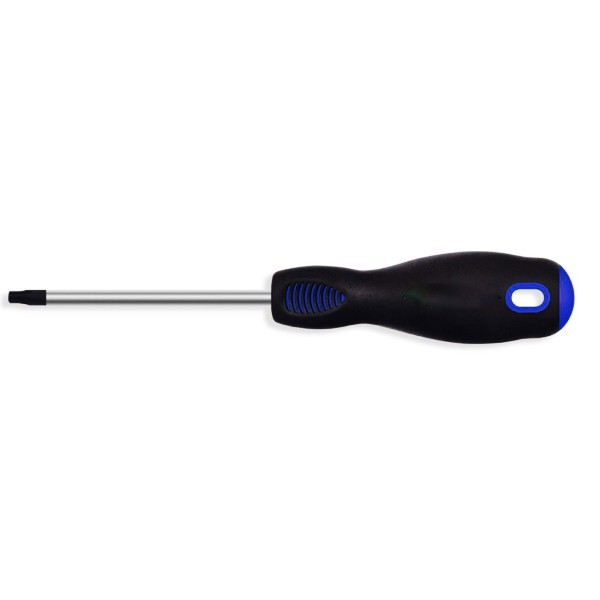
- Ergonomic and soft handle design
- Anti-skid handle that resist chemical and oil
- Various sizes option
- High torque screwdriver
- Blade tip that ensure a excellent fit in screw head
- Screwdriver set available
- Available in a variety of sizes to suit a host of applications
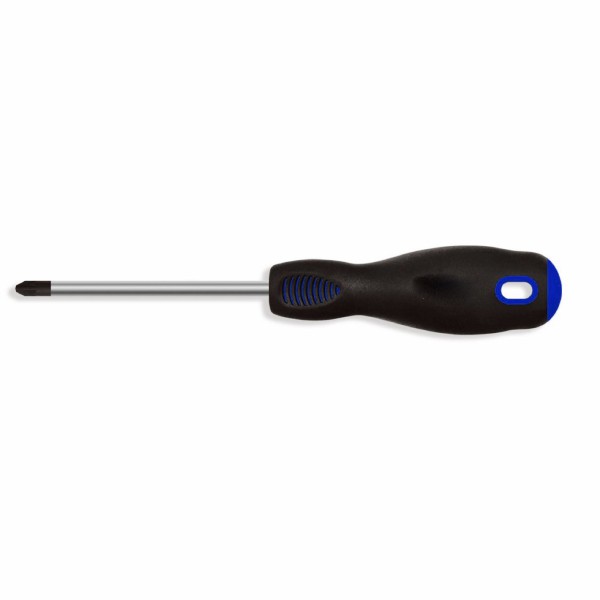
- Pozi screwdriver
- Anti-slip handle provides a efficient work
- Ergonomic plastic handle provides excellent fixation and sits comfortably in the hand
- Unique quality, hardness and wear resistance
- Blade tip to ensure a excellent fit in screw head
- High torque screwdriver
- Long term use without fatigue

This short stubby screwdriver can be used in a variety of DIY, industrial, construction, electrical and automotive projects, especially some places where the operating space is small.
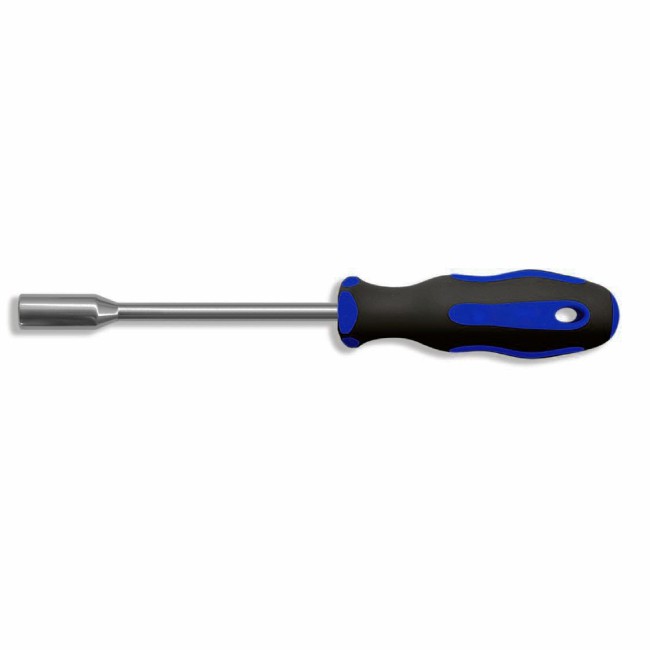
- Anti-slip grip nut driver
- Made by PP&TPV cushion grip offers slip prevention, resist to chemical or oil
- Excellent durability and corrosion resistance
- The nut driver can also feature a deep hexagonal socket that is ideal for long threaded bolts
- Strong construction handle
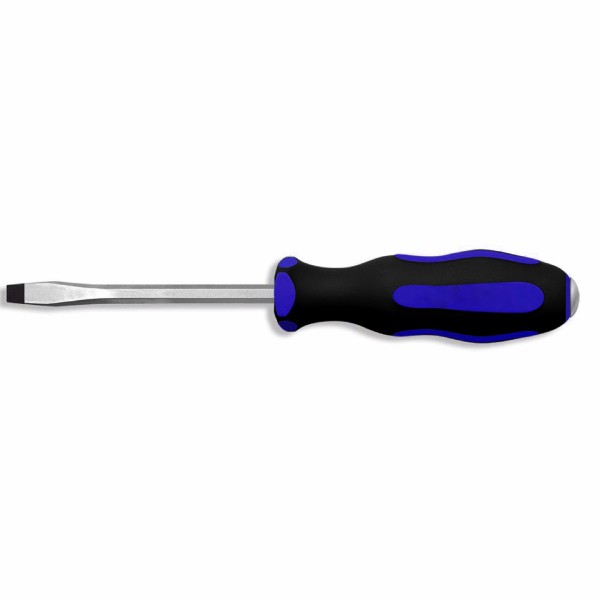
If you are looking for a durable screwdriver, Go Through Screwdriver is likely to meet your many expectations. Its through shaft is made of steel, which is further hardened by integral heat treatment and has higher strength and durability.
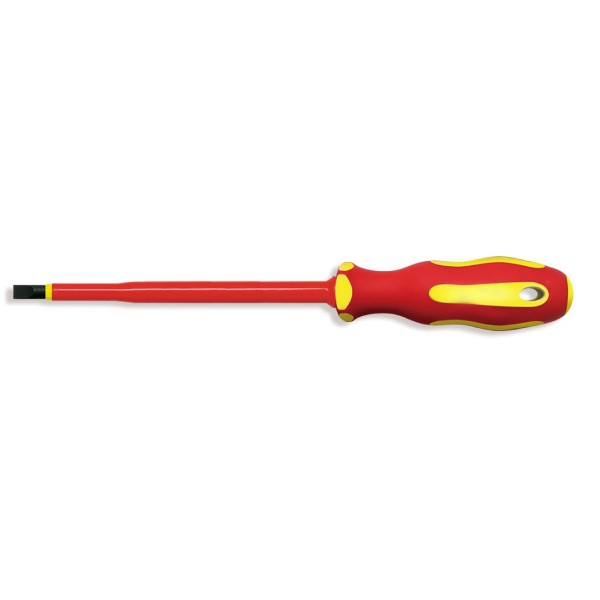
- VDE screwdriver
- Ergonomic handle fit user's hand
- Coating with non-conductive cover
- Slim insulated shaft that can access in hard to reach areas
- VDE 1000 V
Slot Head Screwdriver is a very common type of screwdriver, commonly known as a flat screwdriver, mainly used to rotate slotted screws, wood screws, and self-tapping screws. Compared with other screwdrivers, its positioning is very accurate, and due to its simple structure, it applies force well. The ergonomically designed handle has a soft touch, so it is not only very comfortable but also does not slip when applying force, which helps to complete screw fastening efficiently. The sturdy and durable features make it widely used in households, electronics, mechanical maintenance, and other fields.
Advantages of Slot Head Screwdriver
The slot is not easy to damage: The slot design of the slot head screwdriver is relatively simple, and it is not easy to affect the use due to damage. Even if the slot is slightly damaged, it can still be used in a non-serious situation.
The size requirements for the screwdriver are relatively loose: Compared with the cross screw, the size requirements for the screwdriver are relatively loose for the slotted screw. This means that even if the size of the slotted screwdriver does not exactly match the screw, you can still try to use it, while the cross screw needs to be precisely matched to effectively turn it.
Easy to operate: Since the slotted screwdriver uses a slotted blade, it can not only reduce the force and shorten the operation time, but also is not easy to slip compared to other screw types such as cross screws, making it easier to screw in the screw.
Anti-slip: The blade of the slotted screwdriver can fit the screwdriver tightly, which can better prevent the screw from sliding or slipping compared to other screw types, and improve work efficiency.
How to Use a Slot Head Screwdriver
Before grabbing the first slot head screwdriver available, take a few minutes to think about the location you will be working in. Screwdrivers are available in many sizes, so if you know you will be working in a tight space, consider using a screwdriver with a short shaft. Similarly, if you need to access a fastener under the hood of the car or deep in the wall, then a slot head screwdriver with a long shaft may be the right choice.
It is also recommended to consider the handle material and choose a screwdriver that is suitable for the job. Soft, padded handles are great for reducing hand strain over long periods of work, but if you only need to drive a few screws, then it may be better to use a screwdriver with a hard plastic grip that can help improve control and driving power.
Ensure the Screwdriver Fits the Fastener
Before using a slot head screwdriver to drive or loosen a screw, check to make sure that the screwdriver tip size is appropriate for the target fastener. The tool should fit the width and length of the fastener's slot as closely as possible. If the screwdriver is too big, it will not fit into the slot on the head of the screw. A screwdriver that is too small will be more difficult to use and it may strip the screw, making it hard to tighten or loosen the fastener, even with the correct screwdriver size.
Slide the Slot Head Tip Into the Fastener Slot
After confirming that you have the right screwdriver for the job and that it fits the fastener, you can slide the tip of the slot head screwdriver into the slot on the back of the fastener. Keep in mind that if you are driving in a new screw or tightening a fastener, then you will need to have one hand using the screwdriver and the other hand holding the fastener to prevent it from slipping out of position. Pre-drilling a pilot hole for the fastener can make this procedure easier.
Turn Clockwise to Tighten the Fastener
If you are tightening an existing fastener or driving a new fastener, you will need to turn the screwdriver clockwise. Hold the fastener in one hand and the screwdriver in the other hand with the slot head tip firmly set in the fastener slot. Align the shaft of the screwdriver with the fastener, then apply force as you turn the screwdriver clockwise to drive the fastener into the target material to create a new screw hole.
Turn Counterclockwise to Loosen the Fastener
If you are loosening an existing fastener, you will have to turn the screwdriver counterclockwise to unthread the screw from the hole. Make sure that the tip of the slot head screwdriver is sitting firmly in the fastener slot, then align the shaft of the screwdriver with the fastener to help prevent the screwdriver from slipping and stripping the fastener.
Apply force to the screwdriver as you turn the tool counterclockwise. This additional force on the back of the tool helps to keep the tip of the screwdriver in position. Continue rotating the screwdriver counterclockwise to remove the fastener. Just make sure to have a loose grip on the fastener with your free hand so that it doesn't simply drop to the ground when it comes out of the hole.
Measure the width of the screw head: The first step in selecting the right slot head screwdriver is to measure the width of the screw head. Use a ruler or caliper to measure the distance across the widest part of the screw head. This measurement will help you choose a screwdriver with a blade width that matches.
Consider the thickness of the blade: Along with the width, you'll also want to consider the thickness of the screwdriver blade. A blade that is too thin can slip out of the slot and damage the screw, while a blade that is too thick can damage the surrounding material. Choose a screwdriver with a blade thickness that matches the width of the screw slot to ensure a proper fit.
Choose the right shape: Slot head screwdriver come in various shapes, including flat, tapered, and Phillips. The shape you choose will depend on the type of screw you're working with and the amount of torque required. Flat screwdrivers are the most common and suitable for most slot head screwdriver, while tapered screwdrivers are better for screws that are deeply recessed. Avoid using Phillips screwdrivers on slot head screwdriver.
Consider the length of the screwdriver: The length of the screwdriver can also impact its effectiveness. A shorter screwdriver may be easier to control and maneuver in tight spaces, while a longer screwdriver may provide more leverage and torque. The length you choose will depend on the specific task you're performing.
Invest in quality: Finally, invest in a high-quality slot head screwdriver with a comfortable handle that provides a good grip and a blade made from durable materials like chrome vanadium or high-carbon steel. Quality tools are worth the investment and will last longer.
A Simple Guide to Slot Head Screwdriver Sizes

Another way to describe a slot head screwdriver is to call it a slotted screwdriver. This stems from the fact that the flat tip of the driver is meant to fit snugly into the slot of a screw to tighten or loosen it.
A slotted screw is one of many kinds of screws including the equally-common Phillips head and the somewhat less common square head. There are also hex screws that require a six-sided driver known as a hex wrench or an Allen wrench.
Slotted screwdrivers work best when they fit appropriately into the slot of the screw. For example, a screw with a head that is ¼-inch wide is not easily turned by a driver only half as wide. Likewise, the thickness of the slot on the screw head should also be matched by the thickness of the tool for best results.
Slot head screwdrivers range in size from mere millimeters up to bigger fractions of an inch. Two measurements are noted for each screwdriver: the length of the shaft and the width of the head.
Examples of slot head screwdriver sizes in inches include 3/32 by 1 1/2, 3/16 by 1 1/2, 1/8 by 4, 3/16 by 4, and 1/4 by 4. The first number represents the width of the driver head while the second size indicates the shaft length. The longer the shaft, the farther the screwdriver can reach to tight spaces.
This is especially handy when doing automotive work, as screws are often placed far back in an engine block. If you can reach the head of a screw without the aid of a long shaft, it is better to use a tool with a smaller one.
Slot Head Screwdriver Manufacturing Process
The first stage is to get enormous coils of green wire in diameter. This wire is then treated in a manufacturing facility, where it is pulled to the precise diameter required for screwdriver manufacture. This is accomplished with an adjustable machine that gradually decreases the wire's diameter to the appropriate size.
After drawing, the wire is annealed (heat treated) to acquire the necessary tensile strength of the metal.
The wire is then straightened using a string forge before being moved to a cold forming press, where it is cut to the necessary length and formed into the screwdriver tip and "wings" that will fit into the handle. These wings may be viewed through a clear or semi-transparent plastic grip. The freshly produced "bar" (the real screwdriver minus the Ats handle) is then heat treated in an in-line furnace at around 1,555 degrees Fahrenheit (846 degrees Celsius). This is a continuous flow operation, and when the bars exit the furnace, they fall into an oil quench to cool. The bars are then placed in a draw back oven (450 to 500 degrees Fahrenheit or 232 to 259 degrees Celsius) and cooked to the desired hardness.
Before assembly, consumer model screwdrivers are nickel-plated, or coated with a protective layer of nickel. If the screwdriver is intended for professional usage, it is taken to a hand-grinding section, where the tip is ground to size. The shank is chemically machined, then polished. The screwdriver is then immersed in a nickel flash bath and electrically chrome coated.
After the cold forming press cuts the wire, the screwdriver is delivered to a "swage and grind" process, in which dies make blades for the tip out of the heated wire. The tool is then ground to make the wings.
A screwdriver's handles are typically constructed of cellulose acetate; it is brought to the manufacturer in powder form (cellulose acetate rosin) and then blended with a liquid plasticizer in a massive mixer that contains around 1,000 pounds (454 kilograms) of the combined material. If you want a colorful handle, add pigments to the blender. The resultant paste, which has the consistency of thick cake batter, is then fed into an extruder (a machine that forces material out via an orifice, similar to how a meat grinder forces out strings of flesh), which produces a solid piece of cellulose acetate. The cellulose acetate is then separated into tiny pellets.
The pellets are then fed into another extruder, which extrudes the components for the handles into bars ranging from 8 to 10 feet (2.4 to The slotted screwdriver is the oldest and most popular form of screwdriver, fitting screws with a single slot in the head. There are over thirty distinct types of screwdrivers available today in a variety of sizes, each with a unique purpose and intended to fit into certain screws.
The slotted screwdriver is the oldest and most popular form of screwdriver, fitting screws with a single slot in the head. There are over thirty distinct types of screwdrivers available today in a variety of sizes, each with a unique purpose and intended to fit into certain screws.
The handles are machine cleaned and dried to remove grease, oil, and extra scraps from the extruder and turning machine. The handles are then submerged in an acetone vapor solution to melt and smooth the exterior of the handle. Acetone vapor is very combustible, hence this procedure takes place in an explosion-proof chamber.
The manner of final assembly is determined by the quality of the tool being manufactured. Professional models are constructed separately on a horizontal assembly machine that uses hydraulics to drive the bar into the plastic handle. A hot stamp is used to mark the handles right before they are placed in the assembling process. Each machine must be assembled by one trained person.
Precautions When Using Slot Head Screwdriver
Do not lean or push on a screwdriver with any more force than necessary to keep contact with the screw. A screw properly piloted and fitted will draw itself into the right position when turned. Keep the shank directly over the screw being driven.
Do not hold the stock in one hand while using the screwdriver with the other. If the screwdriver slips out of the slot, you may cut your hand.
Do not hammer screws which cannot be turned.
Do not grind the tip to fit all sizes of screw heads.
Do not try to use screwdrivers on screw heads for which they are not designed (e.g., straight blade screwdrivers on Phillips, clutch head, Torx or multi-flutted spline screw heads).
Do not use defective screwdrivers (i.e., ones with rounded or damaged edges or tips; split or broken handle; or bent shaft).
Do not use a screwdriver for prying, punching, chiseling, scoring, scraping or stirring paint.
Do not use pliers on the handle of a screwdriver for extra turning power. A wrench should only be used on the square screwdriver shank designed for that purpose.
Do not expose a screwdriver blade to excessive heat. Heat can affect the temper of the metal and weaken the tool.
Do not use a screwdriver to check if an electrical circuit is live. Use a suitable meter or other circuit testing device.
Do not carry screwdrivers in your pockets.
FAQ
Q: What is a slot head screwdriver?
Q: What is a slot head screwdriver used for?
Q: What are the advantages of slot head screwdriver?
Q: What is the main function of a slot head screwdriver?
Q: What size is a slot head screwdriver?
Q: What is the difference between round head and slot head screwdriver?
Q: Which is better flat head or slot head screwdriver?
Q: What is the proper maintenance of a slot head screwdriver?
Q: What are the safety precautions for slot head screwdriver?
Do not hold the stock in one hand while using the screwdriver with the other.
Do not hammer screws which cannot be turned.
Do not grind the tip to fit all sizes of screw heads.
Q: Does slot head screwdriver need oiling before storage?
Hot Tags: slot head screwdriver, slot head screwdriver manufacturers, suppliers, factory
You Might Also Like


Send Inquiry
