


Company Profile
Qiao Song Technology Company, founded in 2009 in Taiwan, is one of the outstanding OEM/ODM manufacturers for international brands and multi-stores worldwide.
We have a complete supply chain for one-stop service from design, space planning, prototyping, manufacturing, and assembling to export.
Why Choose Us?
24H online service
You can contact us to inquire about pre-sales, sales, and after-sales services, and we will give you a very satisfactorywe are at your service online 24 hours a day.
High quality
Our products are manufactured or executed to very high standards, using the finest materials and manufacturing processes.
One-stop solution
With rich experience and one-to-one service,we can help you choose products and answer technical questions.
Strictly control the procurement
Insist on quality first, pursuing the concept of integrity, keep quality promise, to comply with state laws and regulations and relevant standards, establish a good corporate reputation and social image, win the trust of the community and win market, improve customer satisfaction and customer.



The unique and robust engine oil display stand offered on the site are not just tough in terms of quality but are also very appealing aesthetically and spacious enough to display plenty of items in one single place. These engine oil display stand are very easy when it comes to installation and are equipped with compression loads feature that let them withstand any weight you put. You can also customize the shelves as well as hooks of the engine oil display stand as per your needs and are multi-usage.
What is Car Tyre Rack?
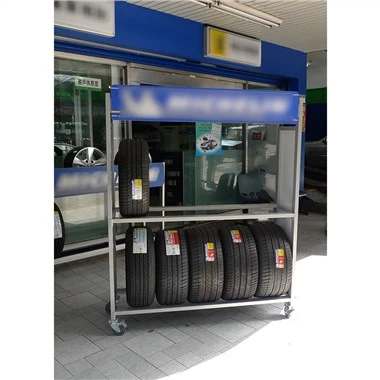
Tire rack systems designed for regular display of tires; It is used for the storage and display of tires used for automobiles, motorcycles, trucks and other vehicle types. Tires are large and comprehensive products. Therefore, there is a need for a regular storage system.
Benefits of Oil Display Stand
The art of showcasing
One of the biggest advantages of investing in display stands is the ability to create an alluring and dynamic display. A well-designed stand can elevate your products, making them irresistible to potential customers. From sleek acrylic stands to rustic wooden ones, the options are endless when it comes to crafting a display that perfectly reflects your brand’s identity.
The power of visibility
Another important benefit of display stands is the increased visibility they provide for your products. With so many businesses vying for consumer attention, it can be challenging to make your products stand out. But with the right display stand, you can showcase your products in a way that makes them impossible to miss. Whether you’re setting up a trade show booth or creating a window display, the right stand can elevate your products and make them shine.
The professional touch
Investing in display stands can also help to project a sense of professionalism. A well-maintained and expertly designed stand can convey reliability and trustworthiness, which is crucial for building customer loyalty. A polished display stand can make all the difference when it comes to making a lasting impression on potential customers.
The versatility vibe
When it comes to displaying your products, having options is key. That’s why the versatility of display stands is such a valuable asset. These stands can be tailored to fit a wide range of products and settings, whether you’re showcasing brochures at a trade show, or creating a window display for a retail store. Display stands are the ultimate tool for showcasing your products in the best light.
The budget-friendly boost
Investing in display stands can be a cost-effective solution for any business. With a wide range of styles and materials available at different price points, it’s easy to find a stand that fits your budget. Plus, the increased visibility and customer engagement that comes with a well-designed stand more than justifies the investment.

With these racks in your facility, you can stack/store tires of various sizes and weights.
They help store thousands of tires in a smaller space.
As these racks are designed for easy assembly and disassembly, you can store it safely when not in use. You can also choose portable tyre racks with casters for easy movement across anywhere in the tire rack warehouse facility.
As they are manufactured from durable materials including stainless steel and steel, the tyre racks withstands the harshest conditions in the tire rack warehouse. They require minimal maintenance as well.
Tire racks are also the cost-effective solution to keep your tires organized in the best way for easy warehouse management and move out.
Types of Oil Display Stand
Headstands
A headstand typically occupies the leading position in a row, resulting from the fusion of two corner trade show booths. It has three open sides and a rear wall. It often attracts a high degree of attention and offers lots of design freedom. Due to the typically variable surface of the stand, you might not have a significant amount of square meters to utilize, especially when compared to a peninsula stand.
Row stands
Out of all the different types of stands, the most common stand is a row stand. Row stands are connected on three sides to adjacent stands, with their front opening towards the hall aisle. They are also commonly referred to as wall stands.
You can easily furnish this stand with roll-up banners and other accessories like a loose wall, floor covering, and a seat. This is an economical and effective solution, especially if you don’t participate in exhibitions regularly.
Walk-through stands
This particular exhibition stand type is relatively rare and, on occasion, is positioned in a location where one might typically expect to find a row stand, right between two other stands.
Usually, a walk-through stand is a bit deeper and doesn’t have a back wall. The visitor literally walks through your stand to the next aisle. This type of stand demands heightened attention from the stand staff since visitors can approach your stand from both sides. Additionally, due to the typically constrained wall surface on both sidewalls, this stand doesn’t provide extensive options for securing promotional materials.
Frequently, you’ll find these stands situated in the corridor between two halls, effectively transforming them into a walk-through pathway. Creating an innovative stand concept is imperative for this stand type.
Corner stands
Corner stands are located at the end of a row – often at an aisle intersection – and are open on two sides. The visitors can access this trade show booth from these two sides. Besides, this stand catches the eye and offers more design options compared to a row stand.
Peninsula stands
The peninsula stand is open on all sides and is enclosed by the aisles. Visitors can access your exhibition booth from all sides, which generates a lot of exposure. As this stand doesn’t have any walls, you need to use freestanding presentation furniture to promote your products and documentation.
A peninsula stand is a true eye-catcher and a means to show you are an A-brand and/or market leader. Peninsula islands are, of course, much more expensive than stands surrounded by the walls of neighbouring stands but you should definitely consider the fact that you are visible and accessible from all sides.
Floor stands
The floor stand is an exhibition stand equipped with an additional level, effectively expanding its available floor space. In principle, each of the previously discussed stand types can be fitted with an extra floor. You should always inquire in advance about the regulations the organizer applies.
A floor stand enhances the sense of exclusivity for guests who have the privilege to access the upper level. It provides an excellent setting to host valued connections and engage with promising prospects. Typically, this additional floor serves a hospitality purpose, although it can alternatively be utilized as a presentation space.
Raw space stands
A raw space stand isn’t exactly a stand per se; it’s essentially an empty floor area allocated by event organizers for exhibitors to construct their bespoke exhibition stands. The reason raw space is a good option is that it gives the choice to consider several options when it comes to the type of stands. You can put up a trade show booth rental or a custom one, raw spaces offer you a canvas to try out different stand design ideas for your trade show appearance. If you’ve already partnered up with a trade show booth design company then choosing a raw space stand becomes one of the best options available since your company can show you a wide variety of booth design options. It allows you to get quite creative with your design.
Shell scheme stands
These types of exhibition booths are the cheapest option for a modest trade show appearance. Offered by the show organizers themselves, this is a low-effort option for the exhibitor. A shell scheme stand is a plain row stand that has wall panels, basic carpeting, a counter for storage, and a fascia with the company’s name on it. Show organisers rent these out in 3×3 meter shell spaces, but if with a larger budget you can extend your booth to a 6×3 meter space. It’s worth noting that exhibitors are responsible for providing and managing all exhibition equipment, banners, and decorations for these spaces.
Types of Car Tyre Rack
Mobile tire racking systems
Its mobility is its outstanding feature. Shelves are mounted on a rail or skid system so they can be slid side by side or one after the other. Thanks to this movable structure, more tires can be stored by using all of the storage units. In addition, thanks to the movable structure, it effectively protects the storage. When needed, the shelves can be brought together to save space.
Multi-level tire racking systems
It is a system with more than one shelf to keep the tires organized. Such racking systems use the storage space in a vertical direction, allowing more tires to be stored in the same space. Multi-level tire rack systems are used to save space for high-ceiling storage areas or warehouse facilities.
Wall mounted tire racking systems
Tires are stored neatly on the wall. Such rack systems are used by mounting the tires on a flat surface (wall) in order to save space. It also allows the tires to be held horizontally or vertically without piling up on any area. Vertically mounted systems allow tires to be stored parallel to the wall, while horizontally mounted systems place the tires side by side.
Tracked tire racking systems
Tracked tires are more difficult to store with conventional racking systems as they are larger and heavier than regular tires. For this, a pallet system is needed. It allows to use the storage effectively. It offers storage options horizontally or vertically on pallets.
Application of Car Tyre Rack
Automobile service centers
Automobile service centers are obliged to stock tires and meet consumer expectations in order to provide fast and effective service. It needs a tire rack system to store different tires according to their sizes, seasons and brands.
Tire stores
Tire shops use tire rack systems to offer a wide selection of tires and display different tyres. These stands allow for easy inspection and selection of different tires.
Car wash and care centers
Car washes and maintenance centers use stands to keep tires in order and provide quick access to suppliers.
Car galleries
Car dealerships prefer tire rack systems to offer complete tires that are compatible with their vehicles.
Warehouses
Tires are products required by car drivers or wholesalers. Warehouses save space while storing tires with tire racks.
Truck and heavy machinery services
Large tire sizes are required to be stocked for trucks and heavy machinery. This requirement also creates the need for tire rack systems.
Components of Car Tyre Rack
Baseplates
An upright frame has at least two (2) baseplates used to stabilize and anchor the pallet rack to the floor. The size of the baseplate is based on seismic forces and the loads placed on the pallet rack. Engineers should check the design to make sure the proper baseplate is specified for the pallet racking.
Shims
Shims are used to level the rack into plumb tolerance on warehouse concrete floors and should match the size of the upright baseplate.
Beams
Two pallet rack beams with a connector on either end are required to form a shelf.
Crossbars
Crossbars help support pallets between the beams. Typically, two crossbars are used beneath each pallet load.
Wood stickers
Wood decking (stickers) such as a 2” × 4” Or 2” × 6” Can be used for product support.
Column protectors
Post protectors and straddle protectors are bolt-on accessories that help shield the upright to minimize damage from forklift impact. See durability add-on accessories.
End-of-aisle guard
End-of-aisle guards are either bolted to the racking or anchored to the floor to help prevent damage at the end of the aisle.
Anchor bolts
Pallet racking must be anchored to the floor. The size, type, and amount of embedment of the bolt is determined by local building codes or seismic engineered design.
Material of Oil Display Stand
Corrugate
Corrugated material is most often used for temporary or seasonal displays. Because of its versatility, this sturdy cardboard can be made into shelving, bins, stands, freestanding promotional signage, and more.
Corrugate is lightweight and easy to print on, making it suitable for temporary promotions and events, such as new product rollout, the back-to-school shopping season, holidays, and more.
This retail display material is also recyclable, making it an eco-friendly choice for temporary displays that have shorter lifecycles.
Metal
Metal, such as steel, aluminum, or iron, is commonly used to create sleek and sturdy permanent retail displays.
The metal parts are covered in powder coating, which helps to delay corrosion and adds to a display’s overall durability.
Wire
Wire mesh displays are frequently used for hanging or showcasing products with hooks, making them suitable for products like hats, bags, or garments.
Along with its durability, an advantage to wire or mesh displays is its flexibility. Hooks and shelving can be moved around the wire or mesh to accommodate the display needs of different products, making it a versatile option.
Plastics and glass
Various types of plastics, such as PVC, polypropylene, and ABS, can be molded into different shapes to create custom displays. Plastic displays are sturdy and adaptable, perfect for various retail environments.
For temporary and semi-temporary displays, a lighter, thinner plastic can be used, since the display does not require an exceedingly long lifespan. However, for permanent displays, thicker and more durable types of plastic are necessary.
Natural and composite materials
Natural materials are often chosen because they match a particular aesthetic. This aesthetic usually leans towards more eco-friendly or rugged brands and products.
Some retail displays require natural accent materials like bamboo, rattan, or cork to create an organic feel, specifically targeting an audience of environmentally conscious customers.
Arguably the most used natural material is wood. Classic, sturdy, and multipurpose, it can be used in various types of retail displays. Most wood is used as a substructure, but sometimes wood is chosen because it matches a brand’s identity.
It can be stained, painted, or left natural to create a rustic or modern look. Wood displays are suitable for a wide range of products and can be custom-built to fit specific needs or esthetics.
Sometimes all-natural isn’t a feasible option, and a brand might choose to go with a composite material for their display.
The most common composite material is called MDF, which stands for Medium-Density Fiberboard. While not quite as strong as wood, MDF is a cost-effective material that is often used as a substitute for solid wood in retail displays.
In general, MDF can be used when wood is called for but not in the budget. A wood veneer can be applied as a laminate to the MDF if the wood grain look is desired, allowing it to blend in with its natural counterpart.
Material of Car Tyre Rack

Steel
Steel is the most commonly used material for making storage racks, including metal storage shelving units. It is prized for its strength, durability, and resilience. Steel storage racks can support a significant amount of weight and hold up well over time, making them ideal for storing heavy-duty items, tools, equipment, and supplies
Most steel storage racks are constructed using steel wire or rods arranged in a grid pattern. The wire or rods may be welded or bolted together to form the frame and shelves, depending on the design of the storage unit. Steel racks tend to be long-lasting, easy to maintain, and resistant to corrosion, rusting & impacts.
Stainless steel
Another type of steel used for storage racks is stainless steel. This material has a higher resistance to corrosion, rust, and staining compared to regular steel. Additionally, stainless steel racks are less prone to bacterial growth, making them a popular choice for use in kitchens, hospitals, and other sanitary environments.
Aluminum
Aluminum is another material for making storage racks, particularly for lightweight or portable storage units. Compared to steel racks, aluminum racks are lighter, making them easier to move around. This makes aluminum storage racks ideal for use in large warehouses or factories where items need to be transported around using dollies or trolleys.
Aluminum storage racks also have a high resistance to corrosion, making them ideal for use in freezing or high-humidity environments. Note: Aluminum storage racks are not ideal for storing items that weigh a lot since this material is weaker than steel.
Plastic
Plastic storage racks are a budget-friendly solution for light-duty storage needs. This material is lightweight, durable, and easy to clean. It can be used for a wide range of purposes, from storing toys, garden equipment to bulkier supplies.
Plastic racks are ideal for homes or other areas prone to dampness since they are not prone to rusting or erosion. They also come in an array of colors, allowing you to find one that matches your home décor. However, when it comes to heavy-duty storage needs, plastic storage racks may not be able to handle the load.
Wood
Wooden shelves and racks are a traditional choice, adding a decorative touch to a room while providing great strength and durability. They are ideal for storing a range of items, including books, tools, and other household items.
Wood storage racks are relatively affordable compared to other materials like steel or aluminum. Plus, they can be repainted or re-stained to match changing home décor. Keep in mind, wood is a flammable material, and it might be susceptible to heat and moisture.
How to Maintain Oil Display Stand
Reasonable load
Each display rack has its maximum weight limit. Avoid overloading the display rack to prevent deformation or collapse. Distribute the weight of the displayed items evenly to ensure balance.
Safe placement
Place the display rack on a stable, level surface to avoid instability. Additionally, position the display rack away from high-traffic areas to prevent accidental collisions.
Regular inspections
During use, regularly inspect the various parts of the display rack, especially if it is frequently moved or used. Identify and address potential issues promptly to avoid affecting the display effect and safety.
How to Maintain Car Tyre Rack
Right type of tire rack
Today, there are multiple types of storage racks available on the market, ranging from selective to high-density. You must select a suitable rack for your facility based on your needs. A thorough examination of the rack design in relation to your load requirements will assist guarantee that your storage system complies with all safety regulations.
The number of items being kept in the rack, the material handling approach, and the space in which you are using it all influence the storage racks you choose. It’s not enough to think about the product’s weight or size, or how the weights are arranged on the rack.
You should also think about how quickly your product sells and how often you have to remove it off the rack. A warehouse with a larger inventory turnover, for example, will need a more robust racking system than one with a lower overall. Furthermore, the storage racks must meet the structural standards of the place in which they are situated.
Make use of available space properly
When it comes to using storage racks, perfect space arrangement and positioning are essential. As a result, it’s critical that your warehouse has enough room for personnel to securely travel through the units and accomplish their loading/unloading work. Instruct your employees to keep aisles and corridors clear of things that have been inappropriately kept.
Regular inspections for damage
The storage shelves are affected for a variety of reasons, including loading method, size of stored products, and so on. As a result, it’s critical to examine your rack and repair or replace them as required.
Routine checks might help you recognize potential damage before it ends up turning into a costly problem.
Our Factory
Qiao Song Technology Company, founded in 2009 in Taiwan, is one of the outstanding OEM/ODM manufacturers for international brands and multi-stores worldwide.

Certificate


FAQ
Q: What is a display stand?
Q: What is a standee display?
Q: What is a stand up display?
Q: What are display boards called?
Q: What is freestanding display?
Q: What is easel standee?
Q: What is a display standee?
Q: What is a floor stand display?
Q: What is a floor display?
Q: What is the function of the rack?
Q: What is the advantage of a rack?
Q: What is the role of rack?
Q: What is a rack and how is it used?
Q: What is the usage of racks?
Q: What is the function of a rack?
Q: What is racking used for?
Q: What is drive-in racking?
Q: What is a rack system?
Q: What is the most common form of racking system?
Q: What is the difference between drive in racking and selective racking?
We're professional auto rack parts manufacturers and suppliers in Taiwan, specialized in providing high quality customized service. We warmly welcome you to buy or wholesale auto rack parts at competitive price from our factory.
